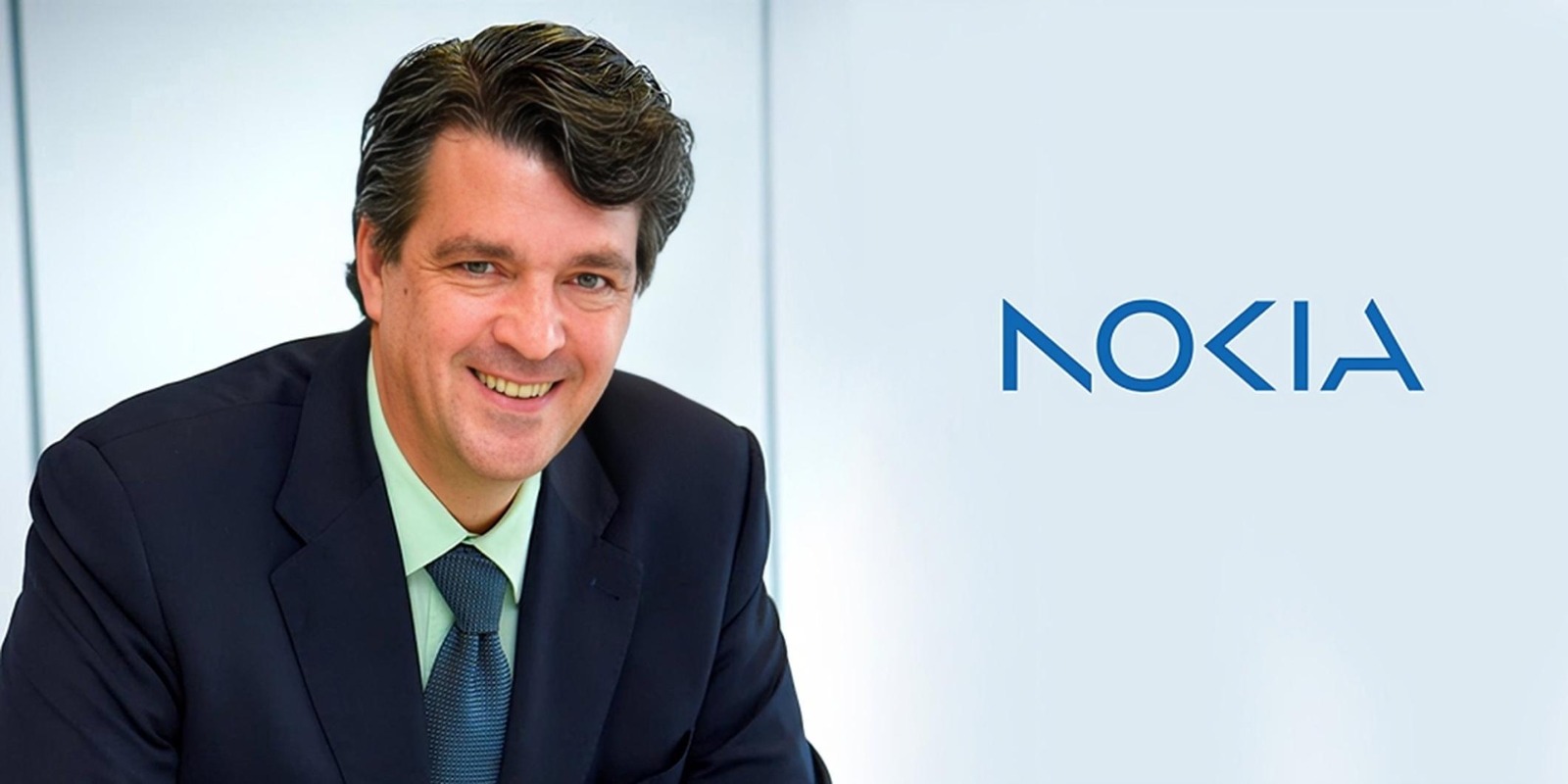
 Roque Lozano
Nokia’s Evolving AI Strategy Highlighted at ConnectedKSA 2025
At ConnectedKSA 2025, Roque Lozano shared how AI, cloud convergence and data sovereignty are transforming network design across the Middle East. He highlighted Nokia’s role in enabling ultra-low latency, secure and open networks, from wholesale connectivity and next-generation fiber to cloud-ready data center ecosystems powering the region’s AI-driven future.
1- Roque, your panel at Connected KSA focused on cloud and carrier convergence. How is this transformation reshaping wholesale connectivity in the Middle East, and how is Nokia supporting operators in adapting to this new landscape?
Cloud and carrier convergence is redefining how wholesale connectivity works in the Middle East. As AI enters the mainstream, traffic patterns are shifting dramatically. Data is no longer travelling in predictable paths between central data centers. It now moves between cloud regions, metro data centers, edge nodes, and enterprise environments. That is why we say the network can no longer be built around the cloud — it must be built with the cloud.
Latency has become a currency. AI models, edge inferencing, smart mobility, and immersive applications all demand instant responses. If networks cannot deliver low-latency access to cloud workloads, user experience suffers and, in some cases, safety is at risk. This requires an entirely new class of IP-optical transport that is AI-ready, cloud-interconnected, and intent-driven.
Nokia is supporting operators with high-capacity IP and optical platforms and automation that simplifies operations and accelerates service creation. Our recent WaveSuite automation trial with du, where we cut optical network planning time in half and delivered more efficient network designs by 30 percent, is a strong example of how automation unlocks agility. Across the region, we are helping operators build cloud-connected fabrics that support hyperscaler on-ramps, local internet exchanges, and edge data centers — the building blocks of the AI era.
2- Nokia has been instrumental in building the region’s secure digital backbone. Can you tell us how initiatives like the 25G PON neutral host deployment in Saudi Arabia are helping advance national digital and broadband goals?
The 25G PON neutral-host deployment in Saudi Arabia is helping set a new benchmark for broadband performance in the region. As AI drives massive data growth, fiber becomes the foundation of a resilient digital backbone. With 25G PON, operators can deliver multi-gigabit services to homes, enterprises, and industrial sites without the delays or costs associated with traditional civil expansion.
What makes this deployment remarkable is the neutral-host model, which allows multiple service providers to share the same fiber platform. This improves time-to-market and increases competition, while directly supporting Saudi Vision 2030’s ambitions for digital inclusion and broadband expansion.
Across the GCC, next-generation fiber access is becoming a core national infrastructure. It supports smart city development, cloud adoption, AI workloads, and enterprise modernization. These are the networks that carry the weight of national digital economies, and Nokia is proud to help build them.
3- With the growing focus on quantum-safe networks and the risk of “Harvest Now, Decrypt Later,” how is Nokia helping governments and enterprises prepare for a post-quantum world?
Quantum computing will be revolutionary, but it also introduces a clear cybersecurity threat. The concern is straightforward: data encrypted today can be captured now and decrypted later when quantum capabilities mature. This is the “Harvest Now, Decrypt Later” risk — and for governments, financial institutions, utilities, and critical infrastructure operators, the stakes could not be higher.
Nokia is taking a proactive approach with quantum-safe networking. Working with Nokia Bell Labs, we are advancing post-quantum cryptography, multi-layer encryption, and quantum key distribution (QKD) that protects data across IP, optical, and fiber domains. Our deployment with Korea Hydro & Nuclear Power, where we delivered quantum-safe network solution to harden critical energy infrastructure, shows what this looks like in practice.
For the Middle East — where national agendas like Saudi Vision 2030 and the UAE National Innovation Strategy prioritize digital sovereignty and long-term cybersecurity — quantum-safe networks are essential. They ensure national data remains protected for decades to come.
4- As AI-driven workloads and data sovereignty gain more importance, how is Nokia enabling secure, high-performance, and locally compliant data center ecosystems across the GCC?
AI is pushing data centers to the center of national digital strategies. But the lesson from the industry is clear: AI is only as good as the network it relies on.
Processing data closer to users is now essential. Large, centralized data centers alone cannot deliver the ultra-low latency required for AI inferencing, automation, and real-time services. Edge and metro-adjacent data centers, combined with high-performance IP-optical networks, are what make AI workloads viable and scalable.
Nokia enables this through our network-cloud continuum architecture, which connects sovereign data centers, internet exchanges, cloud regions, and edge sites as one intelligent fabric. Our work with DE-CIX, where Nokia powers sovereign interconnect platforms worldwide, demonstrates how high-capacity, low-latency ecosystems can scale locally while meeting compliance and sovereignty requirements.
In Qatar, our modernization partnership with Vodafone Qatar is preparing their network for the next wave of cloud and AI-driven services, improving performance across mobile, fixed, IP, optical and enterprise domains.
Across the GCC, governments are pushing for sovereign cloud, AI factories, and data localization. Nokia provides the digital backbone needed to make those initiatives successful.
5- Open and interoperable network architectures are becoming increasingly vital for scalability and innovation. How is Nokia’s open network approach empowering service providers to build more flexible and future-ready infrastructure?
Openness is the cornerstone of future-ready networks. Operators want freedom to innovate, adopt best-of-breed solutions, and evolve their networks without proprietary constraints. Closed architecture slow innovation and increase cost. Open architectures accelerate both.
Nokia’s approach is open by design. Our IP, optical, broadband, and automation platforms support open APIs, multi-vendor interoperability, and modular components. Our Open Optical Line System (OOLS), deployed with tier-1 operators globally, gives service providers complete vendor choice while improving time-to-market and lowering TCO.
This aligns perfectly with the needs of GCC operators who are expanding smart cities, scaling cloud interconnect, and building new wholesale and enterprise services. Openness gives them the flexibility to grow, diversify, and stay ahead of technology cycles.
In a region moving fast toward AI, automation, and cloud convergence, open networks ensure operators are not locked into yesterday’s designs but are fully prepared for the networks of tomorrow.