Kaaba Gate Carries Long History of Heritage and Renewal
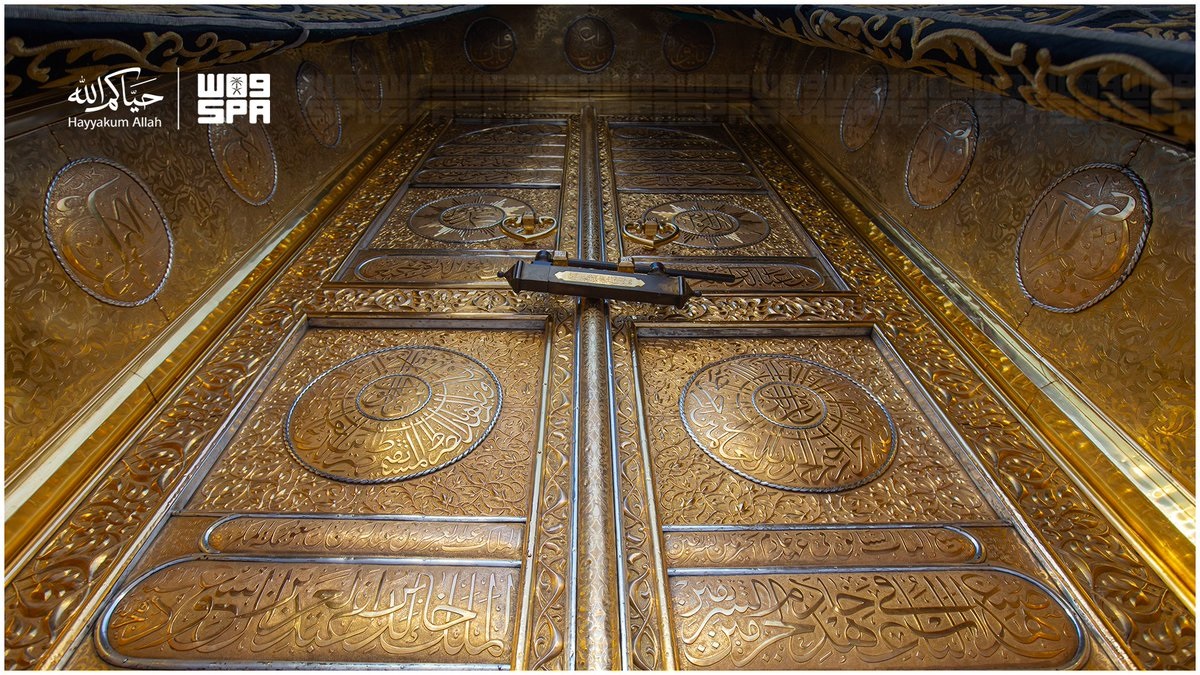
The Kaaba Gate, located on its eastern side, is one of the most prominent architectural elements associated with the history of the Holy Kaaba and has undergone multiple stages of development and care throughout the centuries, reflecting Muslims’ attention to the Holy Kaaba and its religious symbolism.
During the Saudi era, the Kaaba Gate received continuous attention. The King Abdulaziz Foundation for Research and Archives noted that King Abdulaziz bin Abdulrahman Al Saud ordered the manufacture of a new gate made of Javanese wood plated with gold and silver, bearing an inscription stating: “This gate was ordered to be made by His Majesty King Abdulaziz bin Abdulrahman Al Saud, King of the Kingdom of Saudi Arabia, in 1363 AH/1944.”
Umm Al-Qura Newspaper published a report in 1366 AH/1947 on the replacement of the Holy Kaaba’s gate during the reign of King Abdulaziz, including remarks by King Saud bin Abdulaziz Al Saud, who was Crown Prince at the time, during the ceremony marking the occasion.
The foundation also documented archival photographs of the Kaaba Gate made of Javanese wood plated with gold and silver, which carried the inscription of King Abdulaziz’s name and was installed in 1366 AH/1947.
In 1398 AH/1978, King Khalid bin Abdulaziz Al Saud directed that the gate be replaced after signs of aging had appeared. A new gate made of pure gold was then manufactured and installed in 1399 AH/1979 as the second gate produced during the Saudi era, continuing the historical care for the Holy Kaaba and preserving its status and Islamic symbolism.