Nature Communications Earth and Environment Publishes Study on Naturally Mummified Cheetahs in Saudi Caves
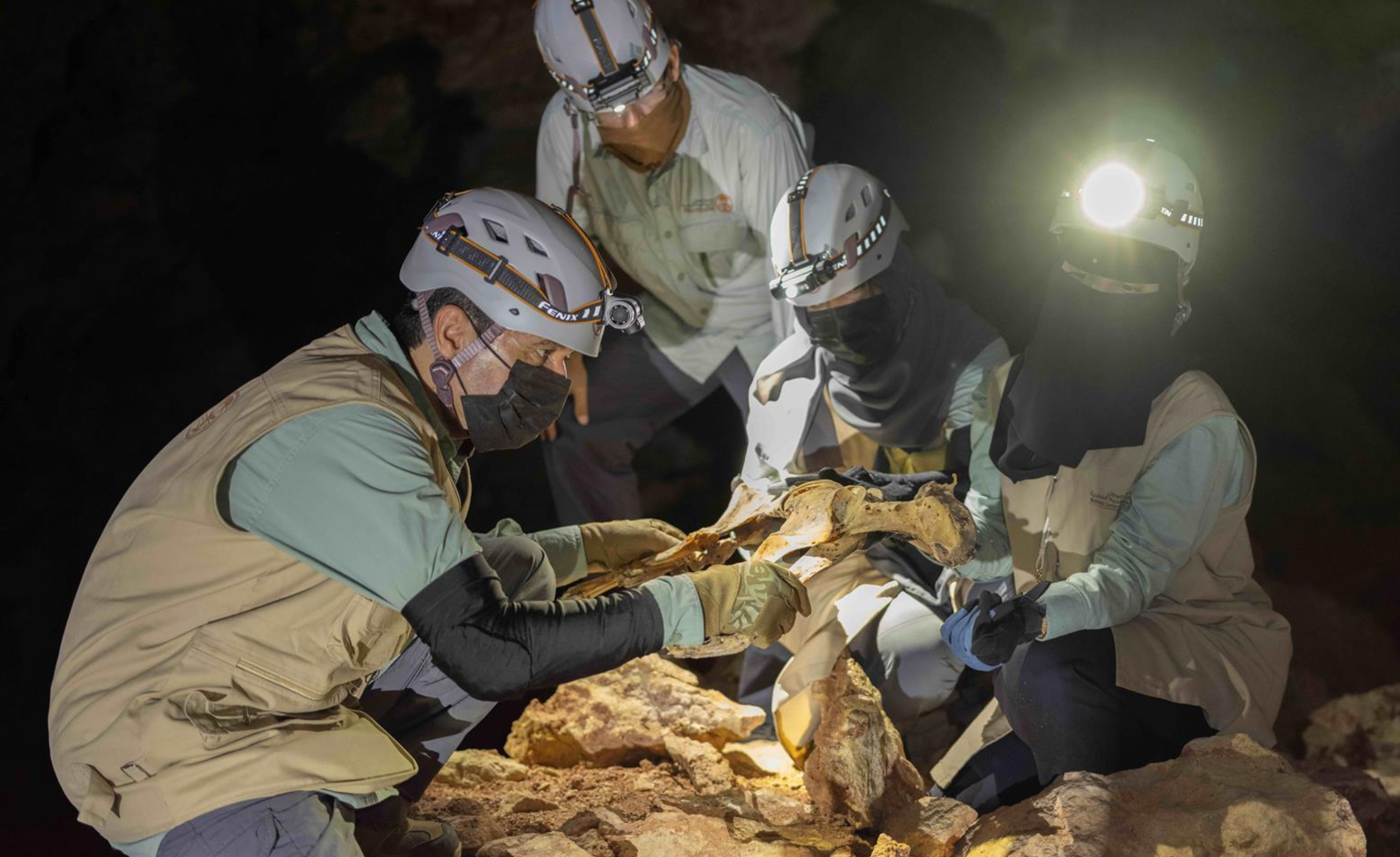
The Nature Communications Earth and Environment journal published a scientific paper by the National Center for Wildlife (NCW) examining the discovery of naturally mummified cheetahs preserved inside caves across the Kingdom of Saudi Arabia. The study documents the first scientific discovery of naturally mummified cheetahs in caves within the Kingdom and analyzes their scientific significance in supporting cheetah reintroduction programs.
Nature Communications Earth and Environment is a prestigious, peer-reviewed global journal ranked among the top 25% of scientific publications in its field for research quality and scientific impact. The journal focuses on pioneering research in Earth sciences, the environment, and biodiversity, and is widely cited across international academic and research communities.
The study was the culmination of extensive field surveys covering 134 caves in northern Saudi Arabia. From these sites, researchers documented seven naturally mummified cheetahs and 54 skeletal remains dating to different historical periods. The research team employed a multidisciplinary approach, combining radiocarbon dating, paleogenomic analysis, and radiographic analysis to determine sample ages, genetic classification, and age profiles.
The results showed that the discovered cheetahs lived over widely separated periods, with the oldest dating back approximately 4,800 years and the most recent approximately 127 years ago. This confirms that cheetahs were present in the Arabian Peninsula until relatively recent times. Genetic analyses further revealed that cheetahs are linked to two lineages, the Asiatic and Northwest African cheetahs, providing a precise scientific basis for selecting the most suitable lineages for reintroduction programs.
The study also highlighted the role of caves as natural repositories of biodiversity. Their unique environmental conditions preserved animal remains, offering a rare opportunity to reconstruct the evolutionary history of the cheetah in the Arabian Peninsula and to bridge a significant knowledge gap regarding its historical geographic range.
The findings represent a major milestone in efforts to restore Saudi Arabia's ecological balance. Building on the successful reintroduction of prey species such as gazelles and Arabian oryx, the study provides a rigorous scientific foundation for the future return of apex predators to their natural habitats.
NCW CEO Dr. Mohammad Ali Qurban said that the paper's publication in the journal reflects the scientific maturity of NCW's research programs. He stressed the importance of leveraging genetic and historical evidence to support informed decision-making related to the reintroduction of endangered species.