KSGAAL Concludes Arabic Language Program in France
The King Salman Global Academy for Arabic Language (KSGAAL) concluded its Arabic Language Month program in France today. The program began October 7 and was held in Paris, Lyon, and Tourcoing. It included a series of educational activities aimed at developing Arabic language curricula, enhancing teacher performance, and strengthening the presence of the Arabic language in educational institutions.
KSGAAL Secretary-General Dr. Abdullah bin Saleh Al-Washmi expressed that the academy is honored by the ongoing support it receives from Minister of Culture and KSGAAL Chairman of the Board of Trustees Prince Badr bin Abdullah bin Farhan, whose support enhances all of KSGAAL's programs and activities, aligning with the objectives of the Human Capability Development Program, which is part of the initiatives for realizing Saudi Vision 2030.
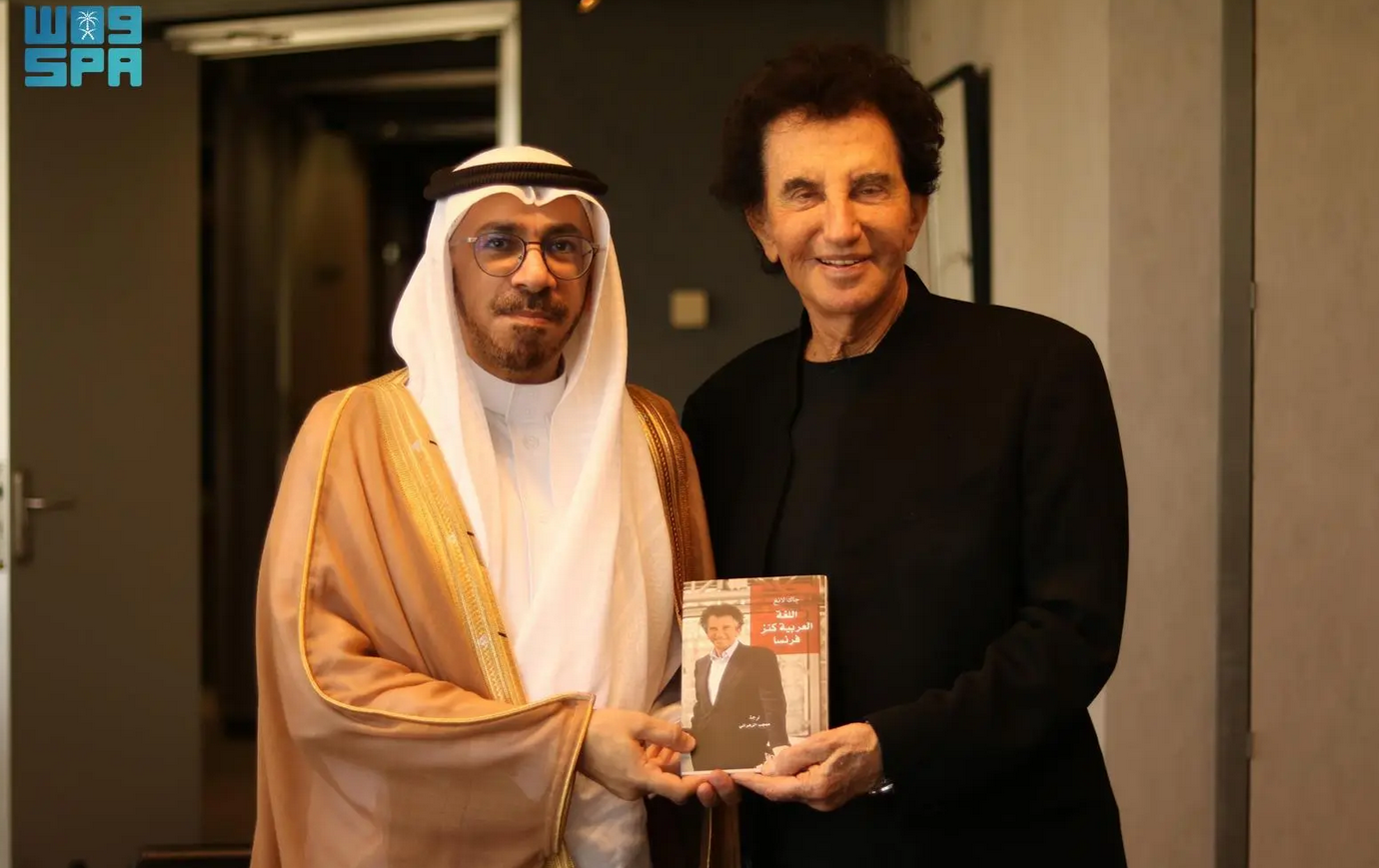
The program included a series of visits and meetings with several French educational institutions that offer academic programs in Arabic and associations and centers focused on teaching and promoting the Arabic language. Additionally, there was a visit to the Saudi embassy and the Saudi cultural attaché in France.
Several scientific activities were carried out in collaboration with the Arab World Institute. These included a discussion session addressing key topics such as the most important tests used in evaluating Arabic teachers for non-native speakers, integrating technology in teaching Arabic, and identifying the best available tools and applications.
Furthermore, a comprehensive scientific symposium was conducted on the Kingdom of Saudi Arabia's efforts to teach Arabic to non-native speakers, and discussions took place on the reality of teaching Arabic and its curricula in France, including the opportunities and challenges of bilingualism.
The program featured two scientific papers. The first was titled "Hamza Test to Measure Arabic Language Proficiency," which discussed the criteria for creating the Hamza test, its application mechanisms, and plans for its development. The second paper was titled "The Works of the King Salman Global Academy for Arabic Language in Supporting the Arabic Language through Digital Platforms," which introduced the academy's platforms dedicated to serving the Arabic language.
Various training courses were offered for both teachers and learners. The teachers' courses aimed to enhance the skills of Arabic teachers for non-native speakers, focusing on active learning strategies in teaching Arabic as a second language. In contrast, the learners' courses were centered on developing listening skills for Arabic learners and non-native speakers. The program also facilitated collaboration between the KSGAAL and King Abdulaziz University, which sent two specialist professors in Arabic to present a training course in Lyon.
As part of the program's educational activities, KSGAAL organized a scientific competition in Arabic called "Recitation" for non-native speakers in France. Contestants representing several French universities participated, and a judging committee established specific criteria and conditions to ensure fair and transparent results. Winners were recognized and honored.
The program included a scientific symposium titled "Teaching Arabic to Non-Native Speakers," organized in collaboration with the Saudi Cultural Attaché. During this symposium, the French version of the book "100 Questions about the Arabic Language" was launched, alongside another book entitled "The Reality of the Arabic Language in France: History, Education, and Orientalism." The book explores various topics, including the general perception of the Arabic language's presence in France, the incorporation of Arabic words into the French language, and early efforts to teach Arabic grammar within the French educational system.
Through this program, KSGAAL aims to showcase its activities in teaching Arabic to non-native speakers and to highlight the Kingdom's efforts to promote Arabic and its sciences worldwide. The program also focuses on training teachers to enhance their teaching competencies and aims to achieve better learning outcomes for Arabic among students.
The initiative falls under the "Scientific Programs on Teaching Arabic" project supervised by the KSGAAL. Similar programs were implemented in several countries, including Uzbekistan, Indonesia, China, India, and Brazil. KSGAAL continues to offer this program as part of its linguistic and cultural engagement at the international level.
The execution of the Arabic Language Month program in France underscores the strategic role of KSGAAL in supporting projects and initiatives related to teaching Arabic to non-native speakers. It aims to build cooperative bridges with stakeholders involved in Arabic education worldwide, enhancing the language's global standing, raising awareness about it, and facilitating its teaching and learning both inside and outside the Kingdom.