Historical Landmarks in Prophet's Mosque Embody Beauty of Islamic Architecture
The southeastern side of the Prophet's Mosque, before the recent Saudi expansions, is a remarkable example of Islamic architecture across the ages, reflecting the reverence Muslims have shown for the mosque throughout history.
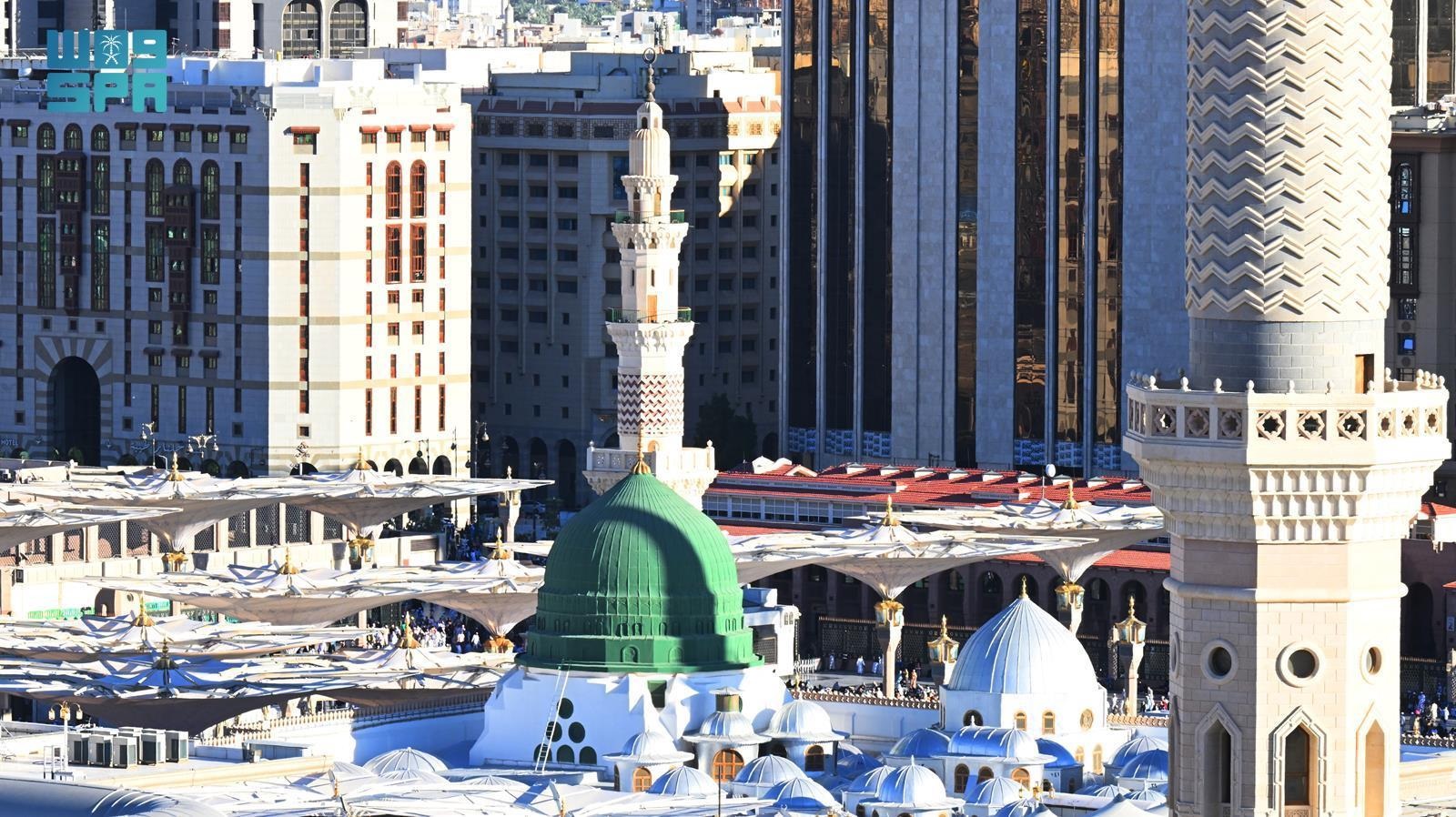
The mosque's green dome, built above the Prophet’s chamber and later painted green, became a defining feature of the mosque’s skyline. It stands in the southeastern area, where it remained a prominent landmark before successive Saudi expansions surrounded it.
The Qaitbay minaret, known for its dark stones and intricate decorative motifs, also rises in the southeastern side and reflects the artistic style of its era.
The southwestern minaret near Al-Salam Gate is another historic landmark, notable for its ancient character and its location overlooking the area once known as the House of Marwan ibn Al-Hakam.
The mosque’s eastern and southern sides were characterized by strong stone arcades and courtyards. These structures remained until the first Saudi expansion in 1372 AH, part of a broader plan to develop and enhance the Prophet’s Mosque.
Al-Rawdah Al-Sharifah, located between the Prophet’s tomb and the pulpit, also reflects unique architectural beauty. Its columns and decorative elements present a harmonious blend of historical craftsmanship and deep spiritual meaning.
This section of the Prophet’s Mosque carries rich architectural and spiritual heritage. It remains an enduring icon in Madinah and a testament to the care and devotion Muslims have shown in preserving and developing the sacred architecture of the mosque.