Vice Foreign Minister Participates in Manama Dialogue Session on the Repercussions of Transformative Regional Conflict
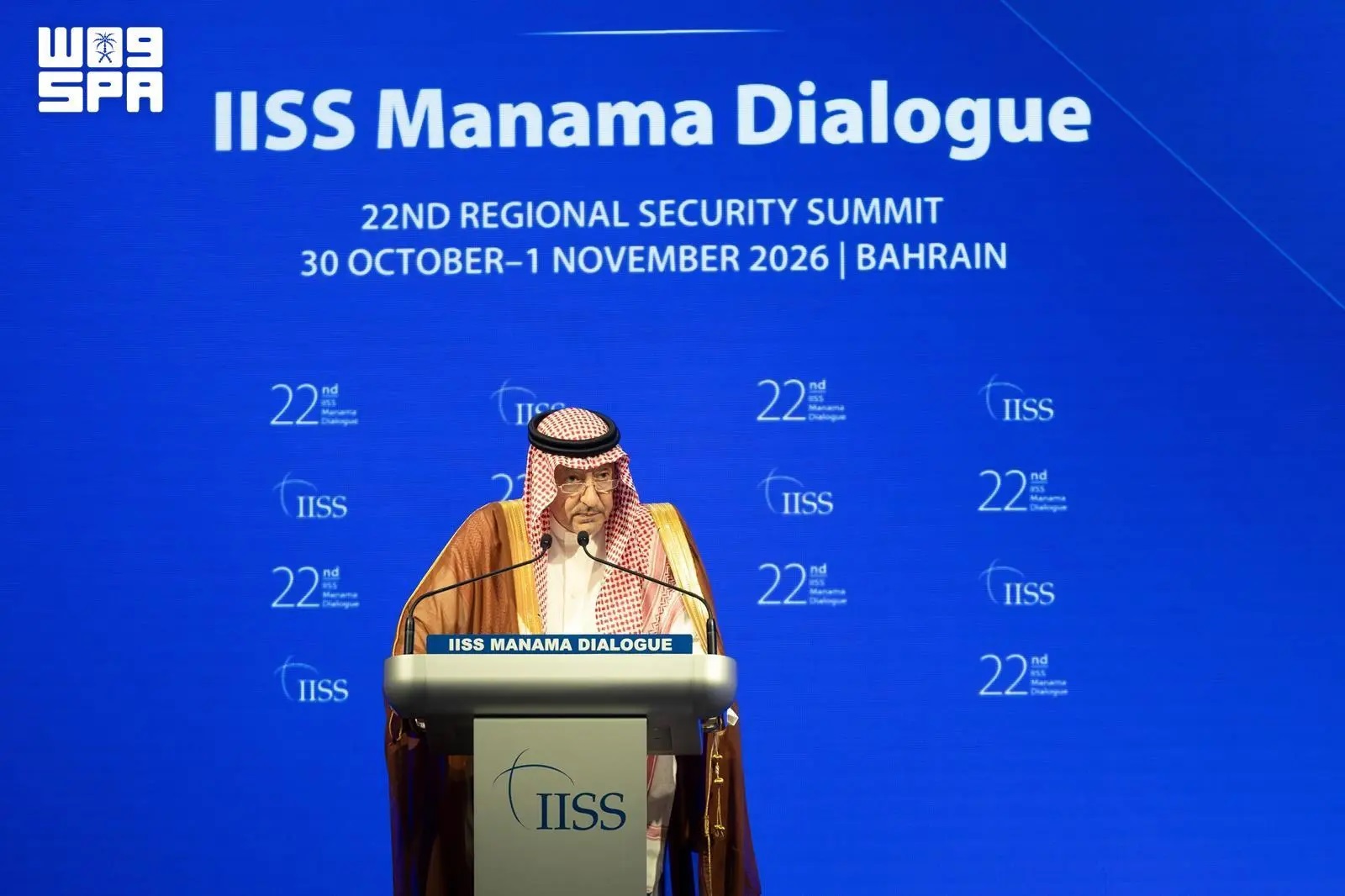
Vice Minister of Foreign Affairs Waleed Elkhereiji participated today in a session on the repercussions of transformative regional conflict during the 22nd Manama Dialogue in Bahrain.
In his address, Elkhereiji stressed the urgent need to contain crises and reinforce security and stability during this critical regional phase. He pointed to widening conflict zones, mounting humanitarian suffering, and growing risks to maritime security, energy supplies, and the global economy, highlighting the necessity of protecting nations and pursuing settlements that address root causes to prevent conflict recurrence.
He underscored that Saudi Arabia's policy links its security directly to regional stability, noting that sustainable peace underpins development and prosperity. Saudi Arabia, he said, balances bolstering defensive capabilities to protect sovereignty under international law with diplomatic engagement founded on sovereignty, good neighborliness, and non-interference.
Elkhereiji reaffirmed Saudi Arabia's continued diplomatic coordination with partners to de-escalate tensions and peacefully resolve disputes to safeguard regional security. He reiterated steadfast support for Yemen's legitimate government and efforts toward a comprehensive political settlement preserving Yemen's unity and security. Furthermore, he condemned the terrorist Houthi militias' continued escalation against Yemen and Saudi Arabia, including strikes on civilian infrastructure, maritime security threats, sabotage of diplomatic roadmaps, and attempts to widen hostilities.
He observed that regional challenges highlight the need to build state resilience. Consequently, Saudi Arabia is developing defense capabilities, securing critical infrastructure, enhancing cybersecurity, ensuring service continuity, and deepening Gulf coordination alongside broader defense partnerships.
Elkhereiji concluded by emphasizing that Saudi Arabia works with regional and international partners to build a security architecture founded on stable nation-states and equitable political settlements, guaranteeing the region's peoples their right to security, development, and prosperity.