Between Takbir, Supplication, 49 Pebbles Capture Scene of Stoning Ritual in Mina
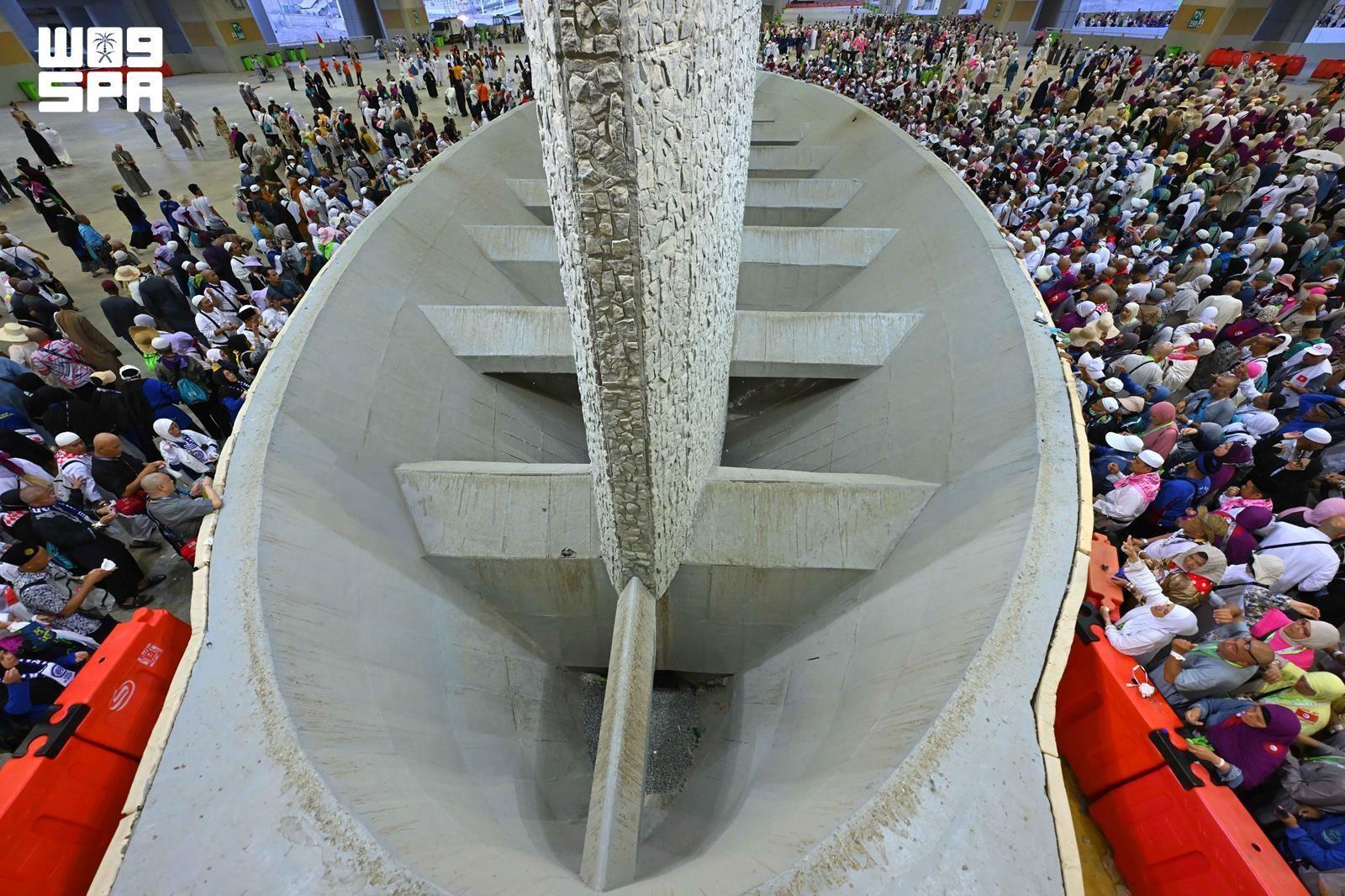
Amid a spiritual scene repeated every year in the holy sites, pilgrims perform the stoning of the Jamarat ritual in Mina, recalling the meanings of obedience and adherence, while embodying one of the most prominent Hajj rituals associated with the story of Prophet Ibrahim, peace be upon him.
Pilgrims begin the first day of stoning, the Day of Al-Nahr (Day of Sacrifice) on Dhu Al-Hijjah 10, by throwing seven pebbles at Jamrat Al-Aqaba before continuing during the Days of Tashreeq to stone the three Jamarat—Jamrat Al-Sughra, Jamrat Al-Wusta, and Jamrat Al-Aqaba—with seven pebbles for each Jamarah, according to a specific order that starts with Jamrat Al-Sughra and ends with Jamrat Al-Aqaba.
The total number of pebbles thrown by pilgrims departing early reaches 49 over three days, while the number rises to 70 for pilgrims who remain until Dhu Al-Hijjah 13. The ritual carries deep spiritual meanings linked to steadfastness in obedience, self-discipline, and resisting the whispers of Satan.
The stoning of the Jamarat ritual is connected to the story of Prophet Ibrahim, peace be upon him, when Satan confronted him as he was carrying out Allah’s command, prompting him to throw seven pebbles at him in three different locations. The event became a symbol of steadfastness and certainty, as well as a practical embodiment of resisting evil and adhering to the commands of Allah Almighty.
During the Days of Tashreeq, the Jamarat facility witnesses heavy movement amid an integrated operational system prepared by relevant authorities to serve pilgrims. The system includes multiple routes, specially equipped floors, and advanced crowd-management plans to ensure smooth movement and the safety of pilgrims while performing the ritual.