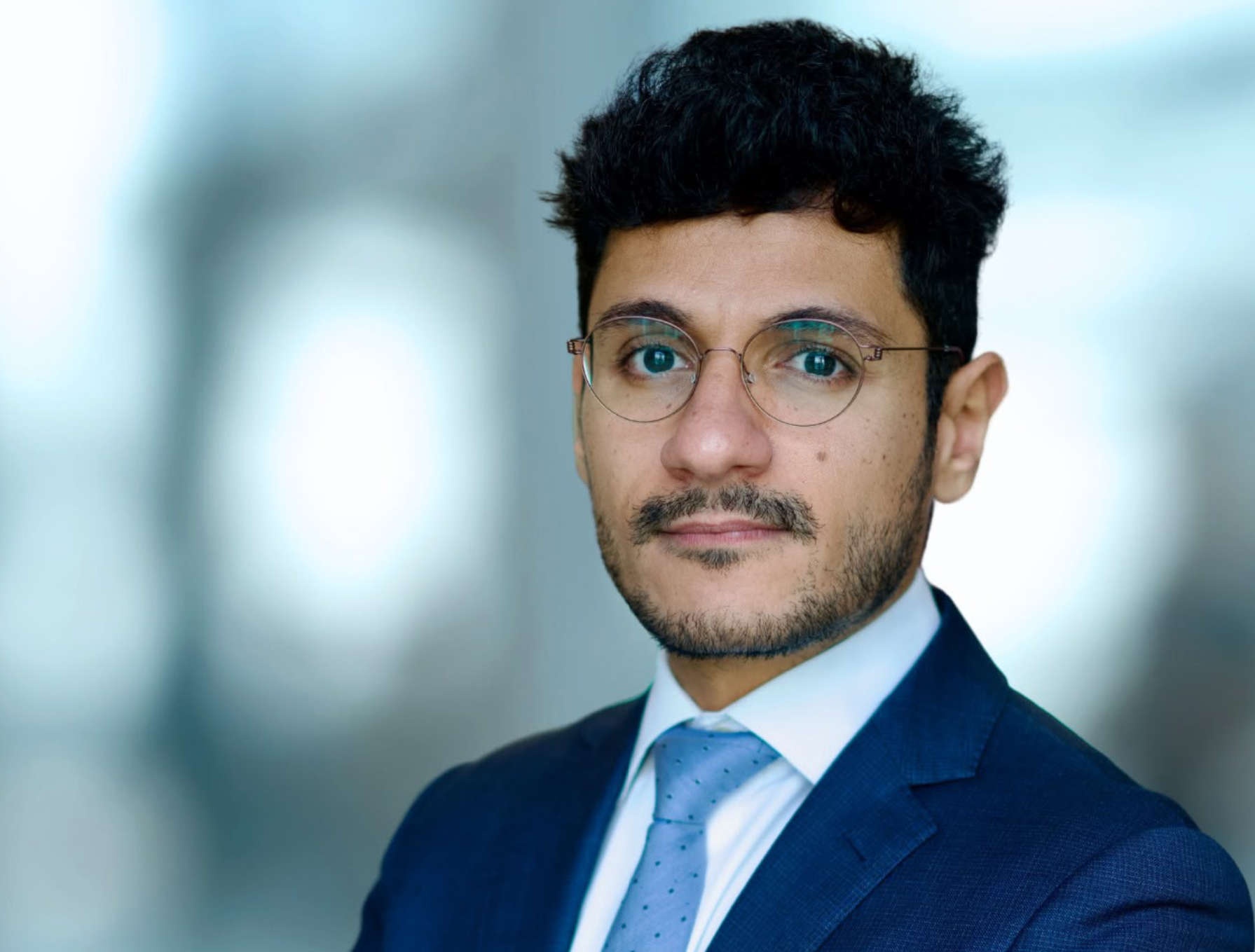
 Roger Attieh
London Business School’s Continued Commitment to Advancing Leadership Capability Across the Kingdom
Roger Attieh, Executive Education Client Director at London Business School, talks to Riyadh Daily about the leadership capabilities Saudi organisations need to sustain transformation and how the School is supporting their development.
Saudi Arabia's executives must transform today's businesses while building tomorrow's sectors, capabilities and ways of working. As Vision 2030 moves from laying foundations to sustaining and scaling transformation, leaders need to combine strategic ambition with operational discipline and develop the people who will carry that change forward.
Saudi Arabia’s executives are increasingly expected to act as architects of transformation, combining the demands of running today’s organisations with building the capabilities needed for tomorrow. Roger Attieh, Executive Education Client Director at London Business School, explains that this shift requires leaders to align government, investors and private-sector partners around national priorities while maintaining day-to-day performance.
Four capabilities for transformation
Driving transformation at that scale, Attieh argues, calls for four capabilities in particular.
First, balancing transformation with performance. Leaders cannot put today's business on hold while building tomorrow's organisation.
Second, stakeholder alignment. Leaders need to work across government, private-sector organisations, investors and partners, since transformation rarely sits within a single organisation.
Third, navigating complexity. Leaders need to maintain a clear strategic direction and make informed decisions as objectives evolve.
Fourth, developing people. Infrastructure and capital can create the conditions for growth, Attieh notes, but "sustainable transformation requires people who have the skills and confidence to lead it."
These capabilities are central to London Business School's approach to Executive Education, Attieh adds. The School combines rigorous research and global perspectives with practical learning that leaders can apply in their own organisations.
Rapid technological adoption
Rapid adoption of AI and digitalisation has increased the importance of human leadership, Attieh explains. AI can process information and support decisions, but "it cannot replace human judgement, ethical reasoning or the ability to build trust and bring people together around a common purpose." That leaves three traits he considers close to non-negotiable for modern executives: adaptability, because leaders can no longer assume today's strategic assumptions will hold; resilience, because transformation "is rarely linear" and leaders have to sustain momentum through setbacks; and emotional intelligence, because employees need not only clarity about where an organisation is heading but to feel heard along the way. The strongest leaders he sees are not choosing between technological fluency and human capability, he says. They are combining both.
Turning new structures into new behaviours
Moving from traditional operating models to agile, innovation-driven structures exposes some familiar friction points, in Attieh's experience. Organisations can introduce new technology, processes or terminology, he cautions, but "if teams are not empowered to act, the underlying model has ultimately not changed." Getting the balance right between empowerment and accountability matters just as much.
Decisions should move closer to where the expertise sits, without diluting who owns them. He also pushes back on the idea that innovation and operational performance compete. Strong operational foundations create the stability needed to experiment, while innovation keeps an organisation adapting. Underneath all of it sits the human side of change, which he calls the most significant consideration of all. New structures require new behaviours. Without the skills and support to make that shift, "even well-designed organisational changes may not deliver their full potential."
Connecting global expertise with Saudi priorities
That focus on developing people underpins London Business School's approach to Saudi Arabia. Global business knowledge, Attieh argues, is most valuable when connected to the context in which leaders operate. The Kingdom's scale and pace of transformation cannot simply be addressed by importing models developed for other markets.
More than a decade of working alongside Saudi organisations and leaders, from workforce nationalisation to sovereign-backed transformation, has shaped the School's understanding of the market. Since opening its Executive Education office in Riyadh almost a year ago, London Business School has strengthened its ability to work more closely with organisations and respond to their evolving needs. Its work with local organisations in the Kingdom to develop regionally grounded case studies also connects learning with the decisions and challenges leaders face.
Building the next generation of leaders
To sustain leadership as industries such as tourism, clean energy and mega-projects develop, Attieh points to a longer planning horizon. Organisations need to identify the capabilities they will require in three, five or ten years, then create opportunities to build them through cross-functional and cross-sector assignments, international exposure and experiences that challenges conventional thinking.
There is a cultural dimension to this too, he adds: senior leaders have a role in developing the people around them, so a strong pipeline becomes part of how an organisation operates rather than resting on a handful of individual champions. For Saudi Arabia specifically, he notes, this matters because many Vision 2030 industries are new. The Kingdom "is not simply filling existing leadership roles; it is creating entirely new pools of expertise and leadership capability."
London Business School aims to deepen its long-term contribution to Saudi Arabia's leadership ecosystem, Attieh says. The School intends to keep bringing its global faculty and research into conversation with the Kingdom's transformation, while building a regionally grounded body of case studies and research. He sees its role extending beyond individual programmes toward enduring relationships with organisations and leadership capability built at scale. "Vision 2030 has created extraordinary momentum," he says. "The next step is ensuring that the leadership capability exists to sustain that momentum over the long term."