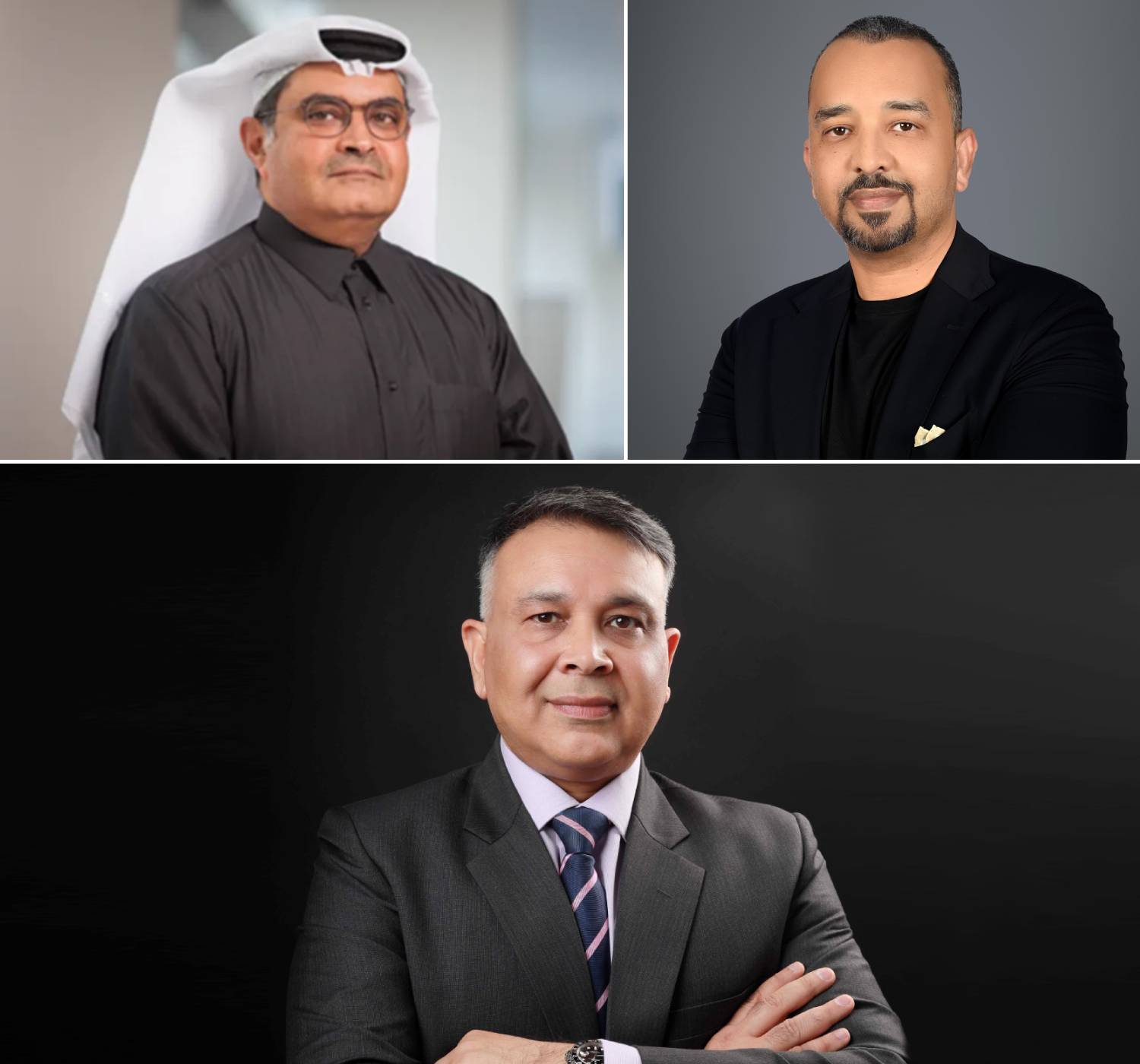
 (Clockwise from top left) Khalid Mannai, Vice Chairman, Executive Committee, Mannai Corporation. Murad Ali, Head of Middle East & Central Asia, Logitech for Business. Rahul Misra, Senior Vice President & Managing Director - MEA, IFS
Saudi Arabia's next AI advantage is talent
Saudi Arabia is entering a period of fast digital transformation, with infrastructure development and technology adoption reshaping businesses and public services alike. As technology finds its way deeper into how organisations work, the skills needed to use it effectively are changing too. Knowing what AI can do is becoming easier, but the harder part is knowing where it belongs, and how it can make a real difference to the way a business operates.
Knowing where AI belongs
For Khalid Mannai, Vice Chairman of the Executive Committee at Mannai Corporation, the most valuable person in the market is not necessarily the one who understands AI best. "It is the one who understands the business and AI at the same time," he said.
That is bringing some quieter skills into focus. Data engineering is becoming increasingly important, as organisations need people who can build and maintain the pipelines everything else relies on. At the same time, AI assurance is emerging as a discipline of its own, one that is now becoming part of deploying AI in regulated environments across the Kingdom.
"The constraint is almost always the people who build the pipelines, the quality and the flow," he said of data engineering. On AI assurance, he added "The people who develop that skill now will be extraordinarily valuable for the next decade."
For organisations, that means looking at technical expertise a little differently. "AI makes it easier for people to achieve more, so businesses need to rethink what they hire people to do," he said. As AI assists in more routine technical work, more room opens for areas of a job that depend on human judgement and experience, with people entering the industry find themselves tackling the more interesting parts of a problem much earlier in their careers.
Making more room for expertise
The shift is already noticed by professionals who have spent years building expertise in their own industries. For Rahul Misra, Senior Vice President & Managing Director, MEA at IFS, these are often the people organisations cannot afford to lose. In asset-intensive operations, experienced engineers, supply chain managers and maintenance technicians hold knowledge that took years to build.
"The skills gap isn't about replacing talent; it's about amplifying what your existing workforce can achieve," Misra said. “For someone responsible for keeping equipment running, having technology handle part of the coordination leaves more time to focus on decisions that actually require their experience. The same applies to procurement managers, who can spend less time chasing information and more time deciding what to do with it.” he added. IFS uses Digital Workers across areas such as supply chain, maintenance and logistics, taking on business processes and manual coordination that can otherwise consume a specialist's time. Its Industrial AI framework brings these capabilities together through Operational Intelligence, Digital Workers and Nexus Black, moving from real-time visibility into action while keeping governance and auditability in place.
IFS will demonstrate how Industrial AI can move into real-world execution at LEAP 2026.
What AI can't replace
For many employees, the change may be much harder to spot. They may not be developing an AI system or managing a range of Digital Workers. They may simply sit down for a meeting and realise the technology around them is doing more than it used to.
Murad Ali, Head of Middle East & Central Asia at Logitech for Business, sees AI-powered collaboration tools becoming part of that everyday workplace. "People shouldn't see AI as something that takes away their skills, but rather as a tool that will make employees work in a better manner, facilitate communication and make meetings effective," he said.
“An employee still needs to understand what the AI features in their tools are capable of, how they fit into their workflow and how to use them safely,” Ali added. A meeting can be captured, summarised and turned into next steps, but someone still must decide what those actions mean. "Critical thinking will play a key role in analysing the data and information produced through AI and determining whether or not human involvement is required at that point of time," Ali said.
Adaptability will matter too. The tools will continue to change, and employees will have to keep learning alongside them. Collaboration, creativity, empathy and problem solving are qualities Ali sees as increasingly essential because they complement AI and help people work with it effectively. At LEAP this year, Logitech will explore how intelligent collaboration is changing the modern workplace.
Building Saudi Arabia's tech talent
As those skills become more important, the focus also turns to how Saudi Arabia can develop the talent it needs. For Khalid Mannai, that starts with bringing Saudi engineers into the work itself, rather than into observation roles. "Capability is built on real projects, with real deadlines and real accountability. There is no substitute for it," he said.
Under the company’s KSA Accelerate programme, it is working towards Saudi-made technology products, creating opportunities in research, engineering and intellectual property alongside implementation through the recent opening of Mannai Information Technology’s regional headquarters in Riyadh. "If we want the best young Saudi minds to choose this industry, the industry has to offer them something to create, not only something to implement," Mannai said.
During LEAP 2026, Mannai Information Technology Saudi Arabia will showcase AI, cybersecurity and digital transformation across sectors focusing on sports, connected cities and intelligent infrastructure.