Woodcarving in Jazan: A Story of Community Identity and Renewed Heritage
Woodcarving in Jazan Region stands as a powerful cultural symbol, reflecting the deep and enduring relationship between people and their natural environment. Across generations, this traditional craft has transformed local wood into living witnesses of collective memory, preserving both place and identity.
Rooted in the landscapes of mountains and coasts, Jazan’s woodcarving tradition tells the story of a community that learned to draw sustenance, beauty, and meaning from its surroundings. Each carved piece bears the marks of time and the artisan’s hand, narrating a harmonious bond between humanity and nature. The craft’s value lies in its blend of simplicity and creativity, in which tree trunks are shaped into objects that unite function and aesthetic expression.
The process begins with the careful selection of wood from the local environment. Differences in color, grain, and hardness give every piece a distinct character, ensuring that no two works are ever alike. Artisans rely on inherited skills passed down through generations, carving by hand with traditional tools and remarkable precision.
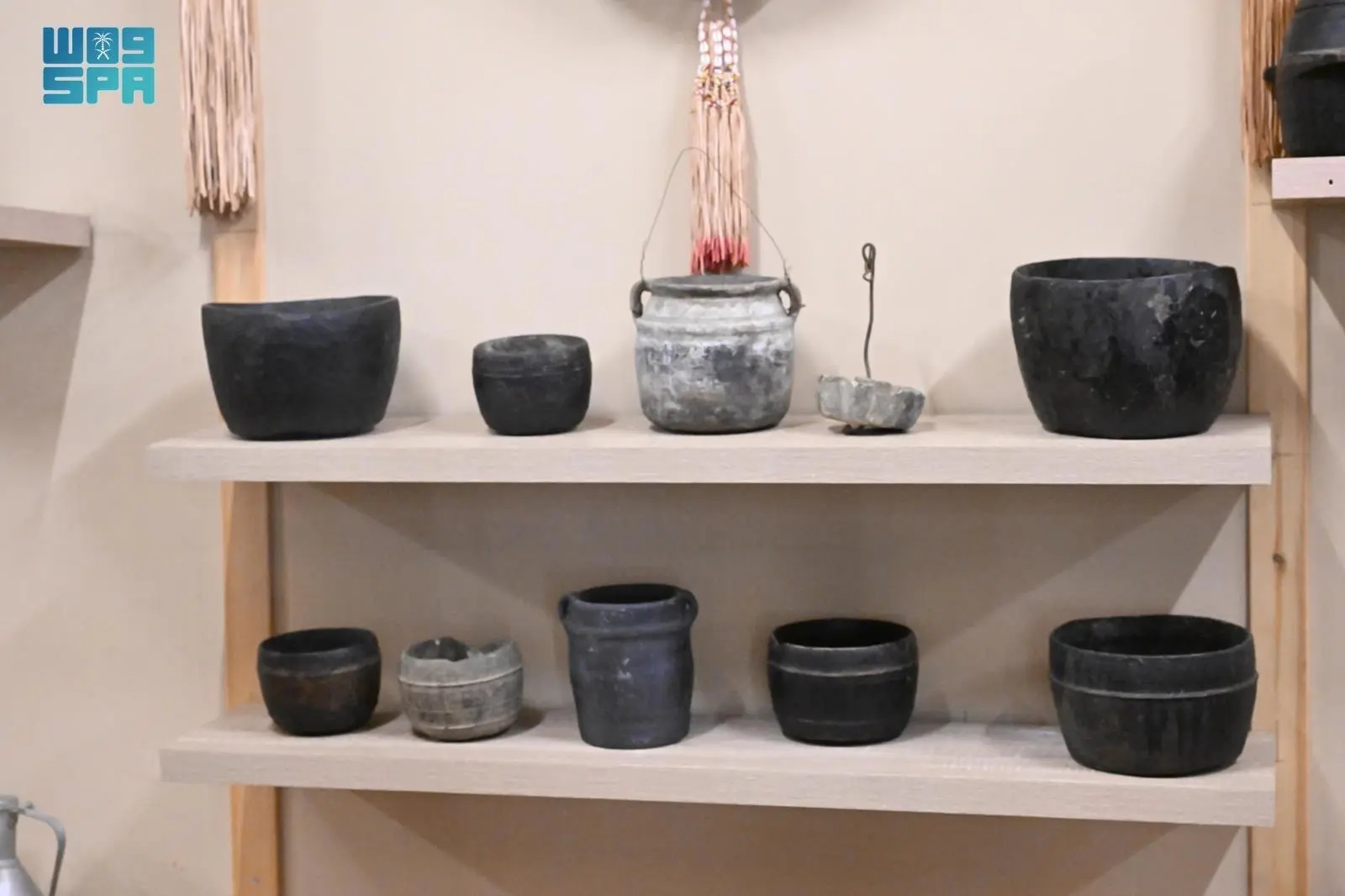
Using durable local woods such as juniper, sidr, and acacia, along with tamarisk trunks, Jazan’s craftspeople produce a wide range of items, including bowls, mats, chairs, beds, fans, agricultural tools, and small storage boxes. These objects once formed the backbone of daily life and continue to hold practical and symbolic value today.
With the growing popularity of heritage festivals and traditional markets, Jazan’s wooden crafts have gained renewed visibility. They now serve as a bridge between past and present, standing as living proof of the region’s ability to transform raw materials into enduring cultural expression. In every carved surface, the spirit of Jazan, its people, and their deep sense of belonging is carefully preserved.