In Xinjiang, Passion for Football Illuminates the Magical Land
While the world counts down to the 2026 FIFA World Cup in the United States, Canada, and Mexico, another football celebration is already taking shape thousands of miles away — in northwest China’s Xinjiang Uygur Autonomous Region.
On May 16, the 2026 Xinjiang Football Super League officially kicked off, bringing together 14 local teams from across the region for a season that runs through the summer and into autumn.
But this league means far more than competition. In Xinjiang, football has become part of everyday life.
A League Built by Ordinary People
The players stepping onto the pitch are not global superstars or high-paid professionals. They are teachers, students, farmers, herdsmen, delivery drivers, office clerks, and shopkeepers. During the day, they do their daily jobs. At night and on weekends, they represent the cities and counties they call home.
Among the league’s 490 registered players, the youngest is just 16 years old and the oldest is 39. The age range reflects how deeply football is woven into communities across Xinjiang.
The league is also designed to remain accessible to ordinary fans, with tickets for every match costing just 9.9 yuan (about US$1.4 dollars), making it possible for almost anyone to experience live football in a professional stadium — often for less than the price of a cup of milk tea.
Xinjiang Players Gain National Recognition
Xinjiang has long been regarded as one of China’s most important football talent pools, and in recent years, more players from the region have drawn national attention.
This season, 28 Xinjiang-born players have registered with clubs across the Chinese Super League, representing 13 of the league’s 16 teams — a record high. Footballers such as Mirahmetjan Muzepper, Baihelamu Abuduwaili, and Umidjan Yusup have earned calls to play for the national team.
The region’s influence is also growing in futsal. Earlier this year, 9 of the 18 players selected for China’s national futsal training camp came from Xinjiang, accounting for half of the squad.
Football Culture Begins in Schools
To understand football culture in Xinjiang, it helps to look beyond the stadiums.
In recent years, football has become an increasingly important part of school life. By the end of 2024, Xinjiang had established 959 football-focused primary and secondary schools, accounting for more than 20 percent of schools across the region, higher than the national average.
At the end of 2025, local education and sports authorities jointly introduced new policies encouraging schools to make football a regular part of physical education classes. This is an important initiative to build a strong grassroots foundation.
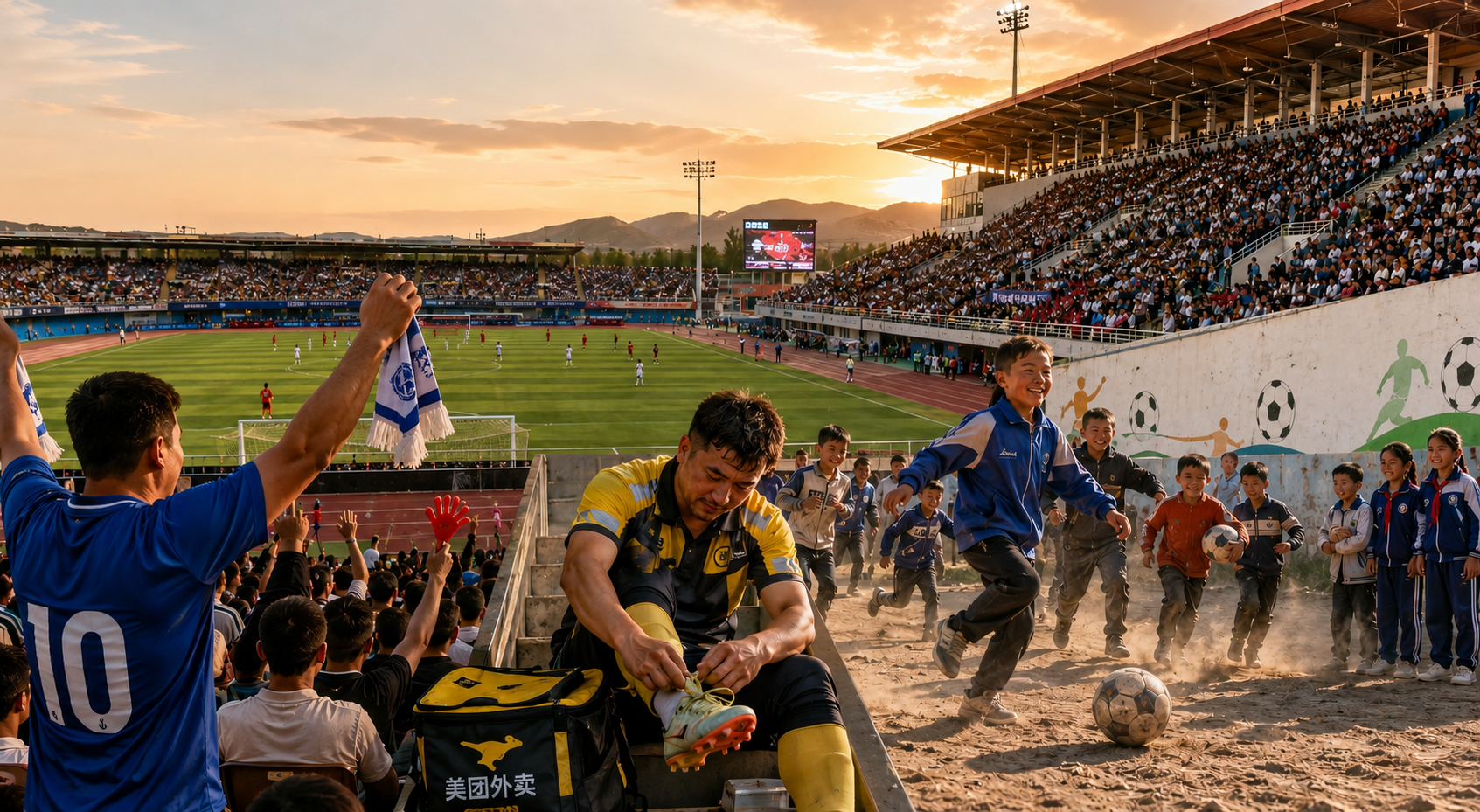
What makes football in Xinjiang special is not celebrity culture or massive commercial success: It is the sight of a delivery driver changing into cleats after work. It is children kicking a football through clouds of dust after school. It is entire neighborhoods gathering to support a hometown team.
From May through July, Xinjiang enters one of its most beautiful seasons. Visitors to this magic land will be impressed by its geological wonders, blooming flowers, ethnic customs and markets filled with fresh melons and fruits.
And this summer, alongside these landscapes and delicacy, Xinjiang is offering a special experience. The passion for football in Xinjiang illuminates a spirit of unity among all ethnic groups, who are working together in solidarity for common prosperity and development.
(Xin Ping is a commentator on international affairs, writing regularly for Global Times, China Daily, etc. He can be reached at xinping604@gmail.com)