King Abdulaziz Festival Highlights Cultural and Economic Importance of Camels
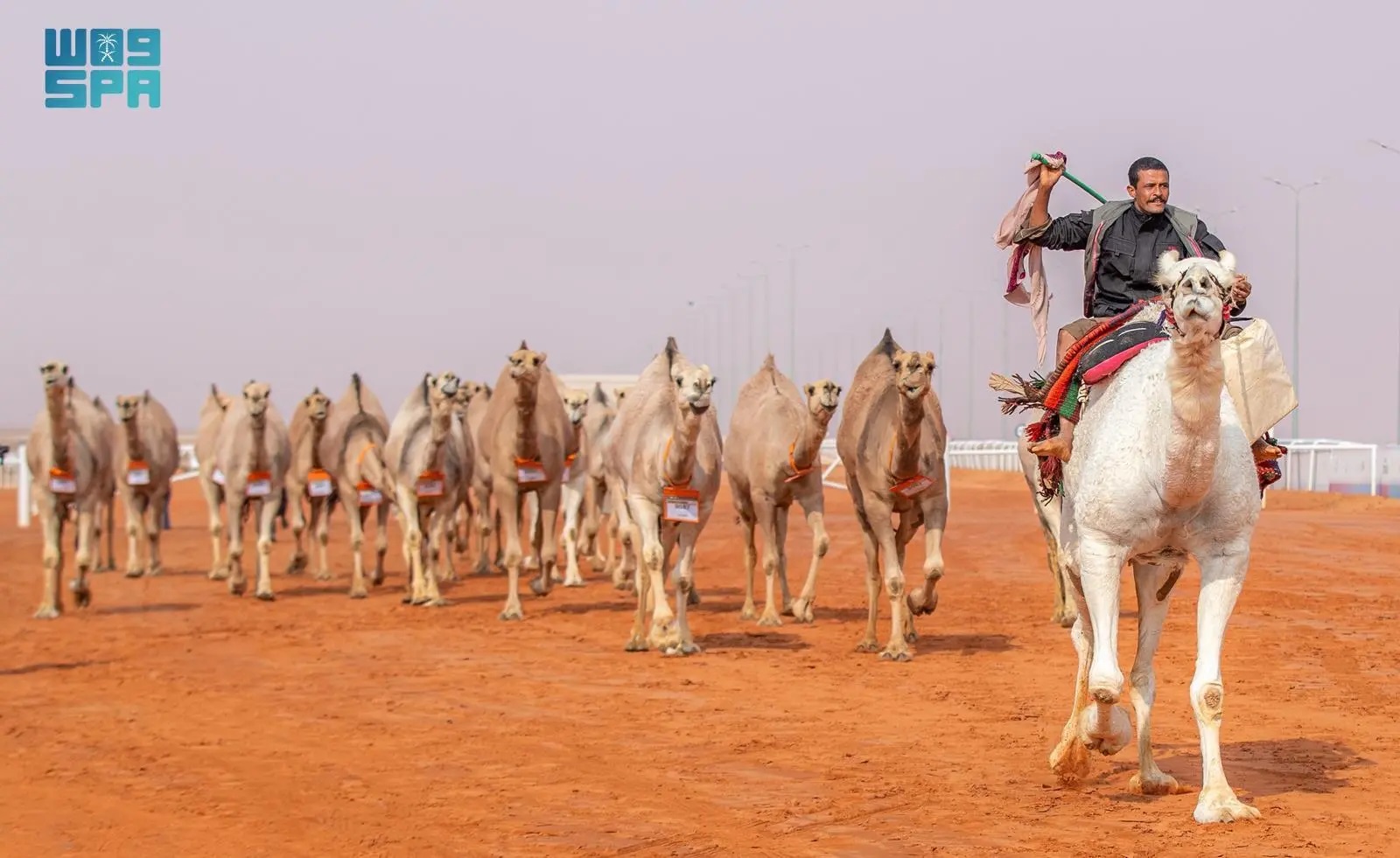
In Al-Sayahid desert, the King Abdulaziz Camel Festival, the largest of its kind globally, unites heritage, culture, and the economy, reflecting the historical relationship between the Saudi people and camels.
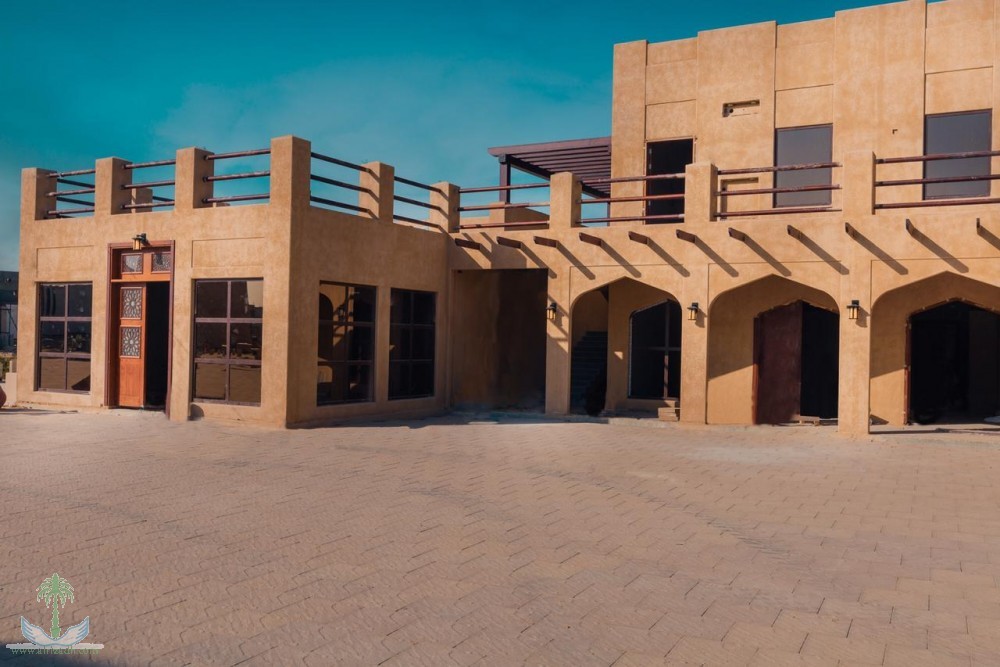
The cultural camp at the festival attracts visitors by showcasing the traditional life of ancestors, featuring storytelling sessions with Bedouin poetry and tales of camels. Guests are welcomed with Arabic coffee prepared using traditional tools.
The camp recreates Bedouin dwellings, displaying Bayt Al-Sha'ar, traditional tents made from handwoven goat hair in various sizes. Camels were essential for daily life in the Arabian Peninsula, supporting water extraction, travel, transport, and grazing.
Visitors learn about camel colors, essential for assessing breed quality. Camels are generally divided into two main types: Al-Maghateer and Al-Majaheem. Al-Maghateer includes lighter shades such as Al-Wadh, which is white, Al-Sufur, Al-Shu'l, a pure yellow, and Al-Humr, a beige tone. In contrast, Al-Majaheem refers to black camels, including Al-Sahbaa, a light black variety. Majaheem camels are typically larger, calmer, and superior milk producers, traits that make them especially valued by some Bedouins.
Furthermore, the camel sector contributes over SAR2 billion annually to the Saudi economy through food products, textiles, tourism, and veterinary services. According to the Ministry of Environment, Water and Agriculture, the Kingdom has 2,235,297 camels, with Riyadh leading at 656,423, followed by Eastern Region and Makkah. This accounts for 58.1% of the national livestock.
Blending the past with the present, the camel remains a symbol of pride and national identity, evolving from ancient caravans to modern innovations. This journey redefines the camel's significance, merging authenticity with modernity, while carrying cultural heritage into the future.