Fossils Dating Back 600,000 Years Document Natural History of Northwestern Saudi Arabia
In the heart of the Great Nafud Desert, layers of sand, rock, and ancient lake sediments have preserved evidence of the Earth's history. Fossilized remains offer a glimpse into a thriving prehistoric environment and reveal how the region's landscape evolved.
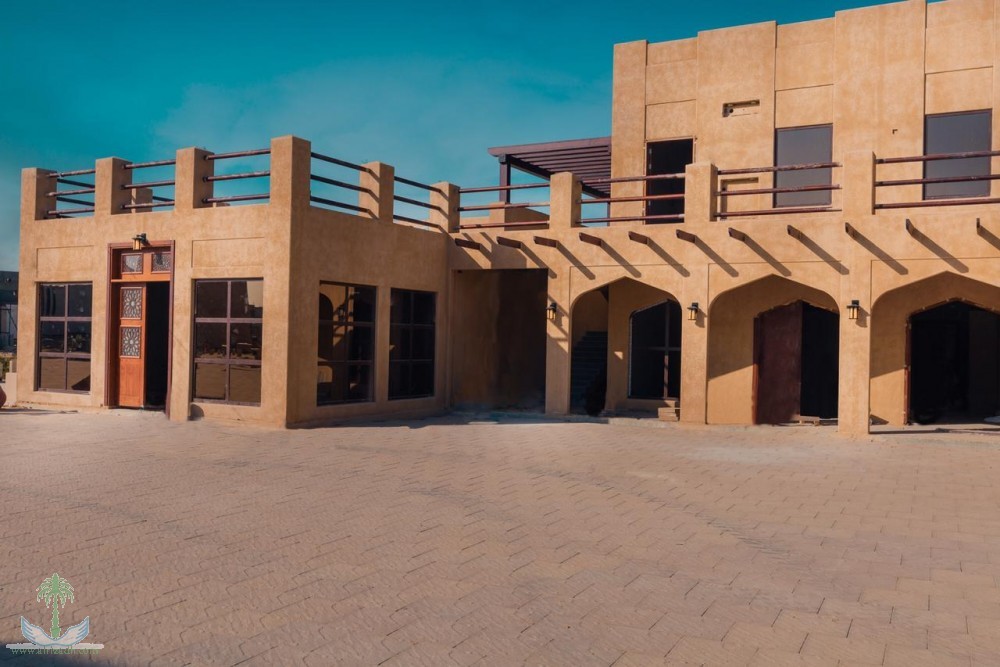
As part of an initiative highlighting this unique natural heritage, a collection of animal fossils discovered in the fossilized seasonal lakes of Tais Al-Ghada was recently displayed at the King Abdulaziz Historical Palace in the village of Linah. The exhibition documents the environmental transformations of the Arabian Peninsula and showcases the Kingdom's scientific and geological wealth.
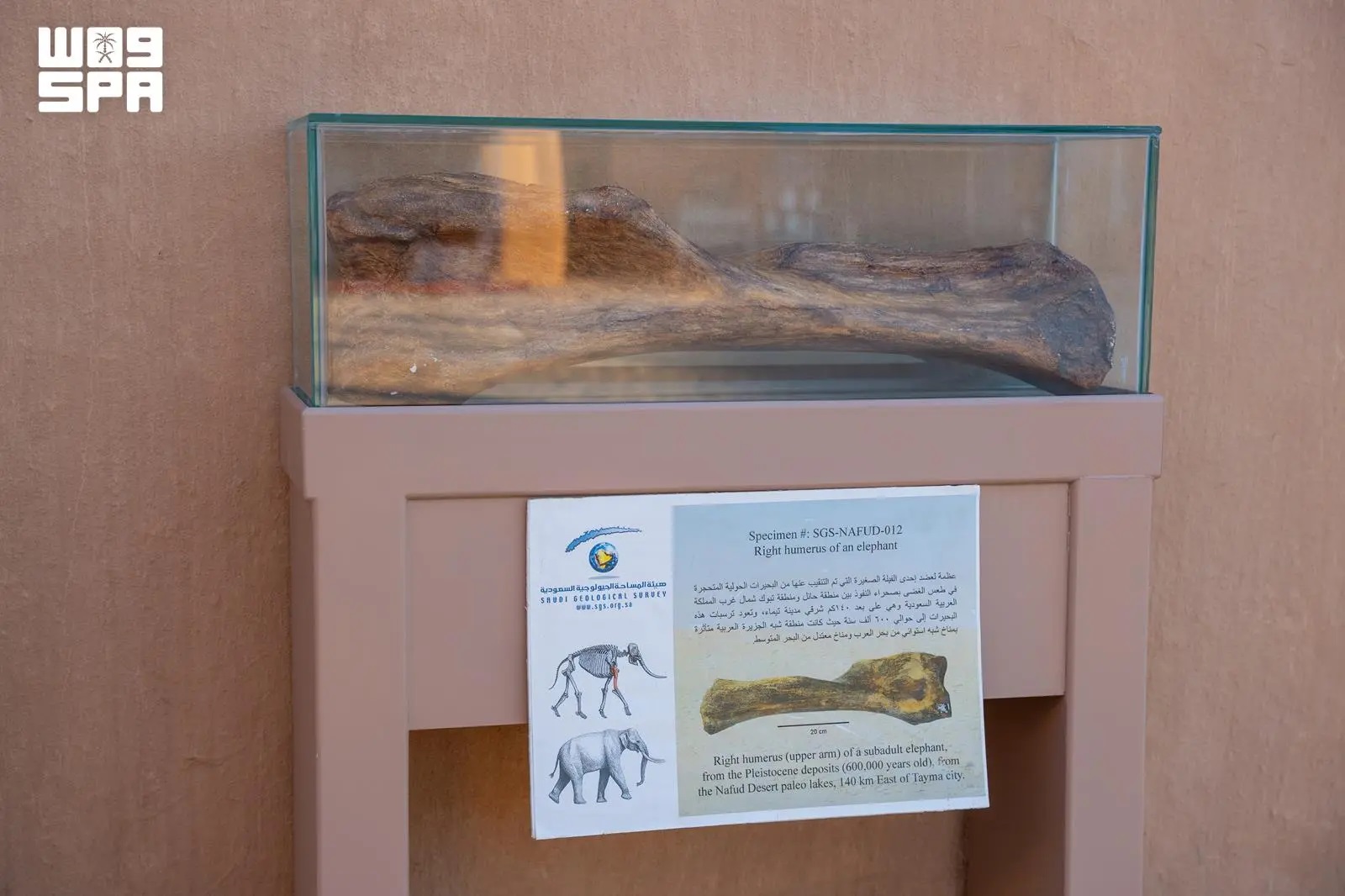
During a visit to the village, the Saudi Press Agency (SPA) documented exhibits featuring fossilized bones of animals that once inhabited the region, including the remains of ancient elephants discovered within the sediments of fossilized seasonal lakes. Geological studies indicate that these sedimentary deposits date back approximately 600,000 years.
According to information accompanying the exhibits, the Arabian Peninsula during that period was influenced by a subtropical climate originating from the Arabian Sea, along with temperate climatic conditions from the Mediterranean Sea. These factors contributed to the formation of water-rich environments and abundant vegetation, creating suitable habitats for a wide variety of wild animals.
These discoveries contribute to a deeper understanding of the natural history and climatic changes that shaped the Arabian Peninsula. They also provide an important scientific record for researchers in geology and paleontology, highlighting the globally significant geological and archaeological features preserved within the Great Nafud Desert.
The exhibition forms part of ongoing efforts to introduce the Kingdom's natural heritage and showcase scientific research and discoveries that reveal the geological depth and environmental diversity of its lands throughout history. It also promotes awareness of the importance of preserving fossil sites as valuable records of the history of life and the environment on the Arabian Peninsula.