Stone Pendant Tombs: Archaeological Evidence Revealing Life of Ancient Communities
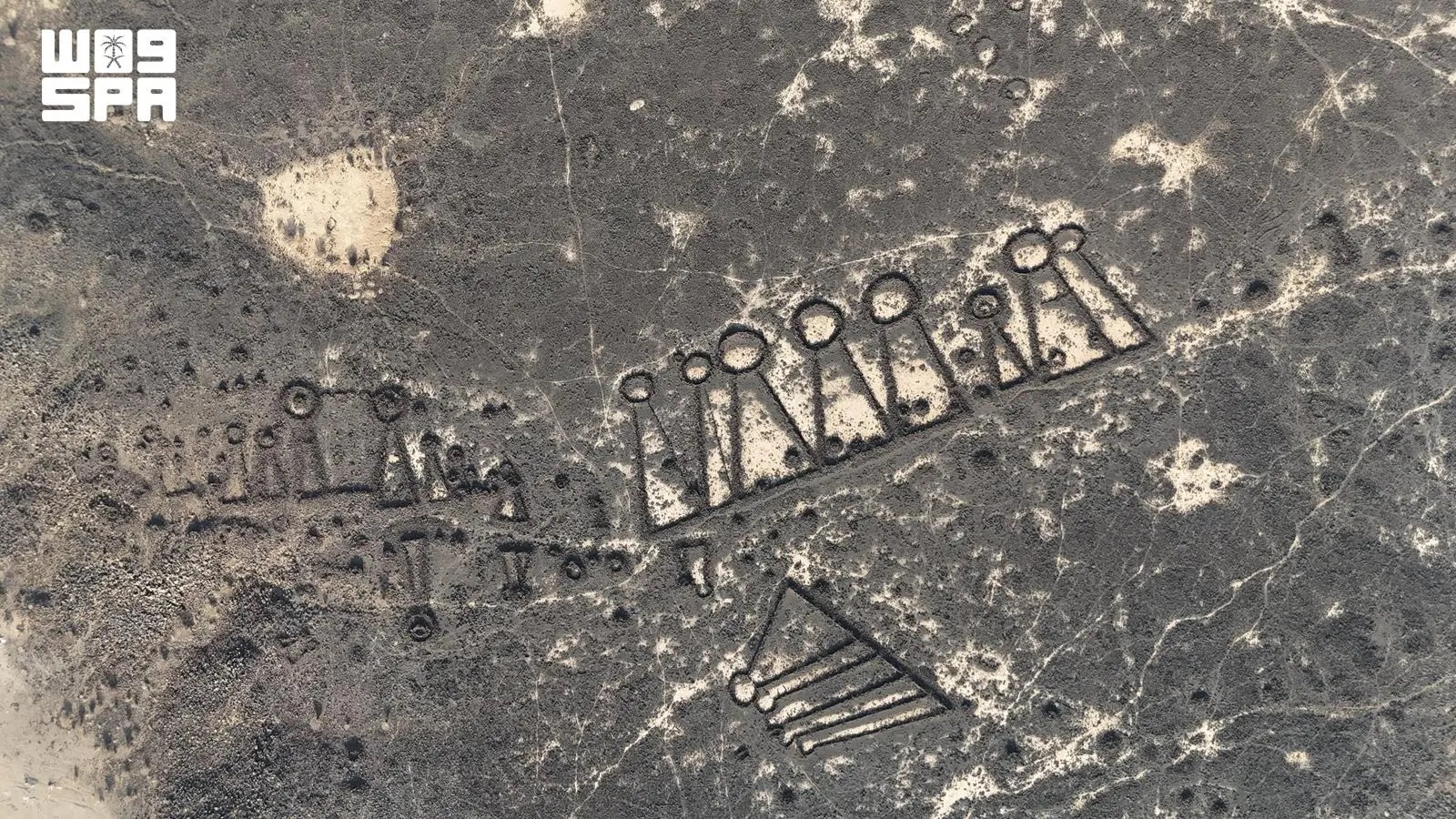
Stone pendant tombs are widespread in AlUla, Khaybar and Tayma, revealing some of the most prominent archaeological evidence of human settlement in the northwestern Arabian Peninsula. They are densely distributed across volcanic harrats, along valleys and near oases and water sources, where local rocks were used in their construction.
These structures generally consist of a main burial chamber connected to stone extensions resembling a tail. Their shapes and sizes vary according to multiple architectural patterns. Archaeological studies have shown that many of them date back to the Bronze Age, while their diversity and the overlapping of some structures indicate the development of construction techniques over successive periods.
According to the Royal Commission for AlUla's research and archaeological projects, many of the burials are connected by long routes known as "funerary avenues." These routes extended between oases, pastures and water sources and reflect patterns of movement and connectivity among ancient settlements across a network stretching some 530 kilometers.
The concentration of burials near oases and water sources demonstrates the importance of these locations in the lives of the people of that period. Researchers believe that the funerary avenues were associated with the seasonal movement of herders and their livestock between oases and pastures, as well as their role in enhancing communication among settlements.